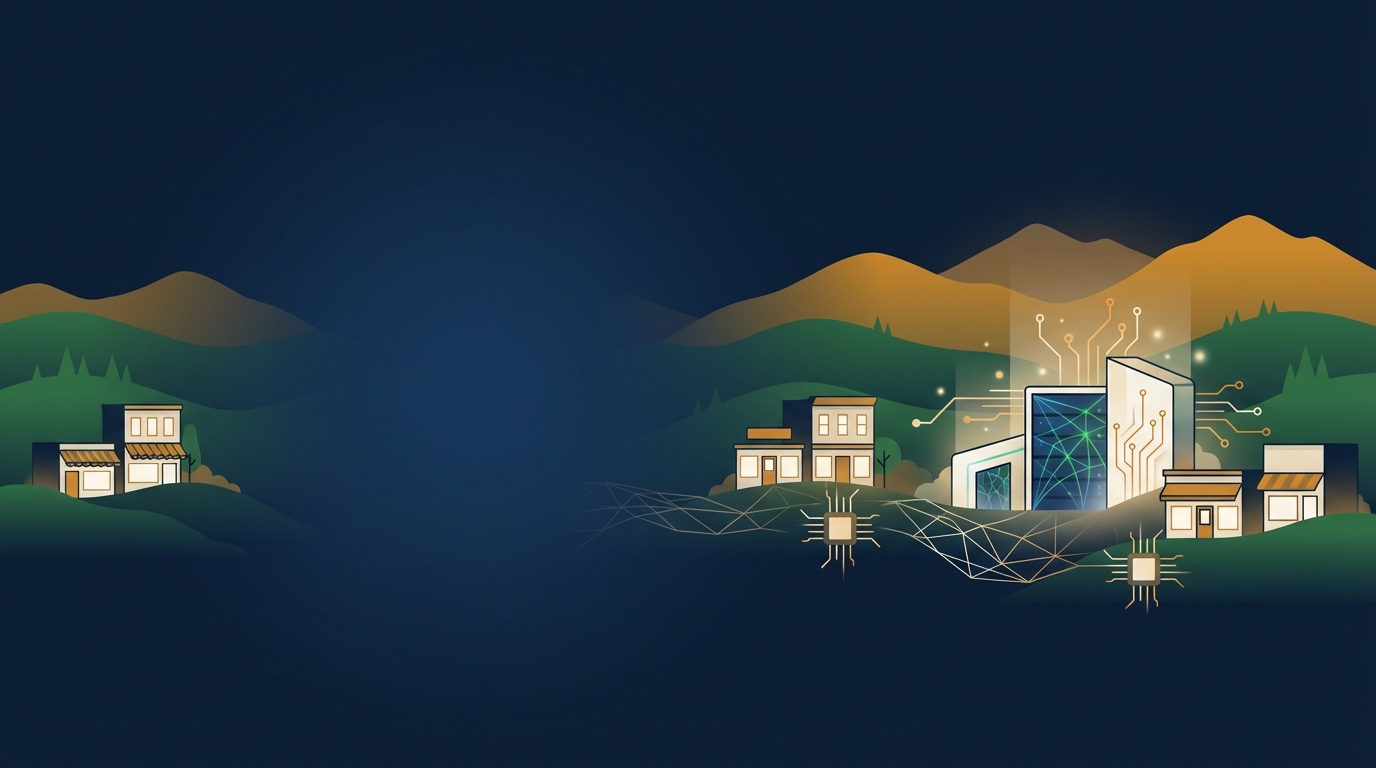
Data Centers in Coal Country: Opportunity or Risk?
Big tech is coming to the coalfields
From Tucker County, West Virginia, to Wise County, Virginia, tech companies and data center developers are eyeing former coal country for massive computing facilities. The same land that once powered America’s steel mills and railroads is being pitched as the next frontier for powering artificial intelligence.
The scale of investment is enormous. West Virginia’s governor recently announced a $4 billion data center project in Berkeley County, promising 1,000 construction jobs and 125 permanent positions. Across the border in Virginia’s Wise County, the Mineral Gap Data Center already runs on a 3.4-megawatt solar array built on reclaimed strip-mine land. And the proposals keep coming.
For small business owners across the region, this raises a direct question: is this the economic lifeline Appalachia has been waiting for, or a repeat of the extraction economy under a different name?
Why Appalachia, and why now
The appeal is straightforward. The region offers large tracts of inexpensive land, often near transmission lines originally built for coal plants. Natural gas infrastructure runs beneath many counties. Cooler mountain air reduces cooling costs. As metropolitan data center hubs reach saturation, rural areas with fewer regulatory barriers draw increasing interest.
West Virginia has moved aggressively to capitalize. The state passed legislation encouraging natural gas and coal to power AI data centers, offering streamlined permitting, tax incentives, and state preemption of local development barriers. Governor Morrisey has stated he wants West Virginia to become the “single best place in America for data centers.”
Virginia has taken a different path. Southwest Virginia localities offer the state’s lowest regional property tax rate on data center equipment at 24 cents per $100 of assessed value, competing for the same investment dollars.
The economic promise
The revenue potential is real. In Virginia’s Loudoun County, data centers generate 35 to 40 percent of general fund revenue, with fiscal contributions projected to reach $1.1 billion by 2026. A PricewaterhouseCoopers study found data centers contributed $54.2 billion to Virginia’s GDP between 2017 and 2021.
For Appalachian communities still recovering from coal’s decline, these numbers are hard to ignore. Tax revenue could fund schools, roads, and broadband infrastructure. Construction phases create immediate jobs. New facilities need local services, from catering to security to maintenance.
Some projects already show what’s possible. We covered the broader infrastructure trend and the $4 billion Penzance project in detail earlier this month.
The concerns are just as real
Not every community sees a data center and thinks “opportunity.” In Tucker County, residents formed Tucker United to fight a proposed facility near the resort towns of Thomas and Davis. The Ridgeline project would include a 785-megawatt gas-fired power plant with 30 million gallons of diesel fuel stored on site, all within the headwaters of the Blackwater River watershed.
A Harvard environmental health analysis estimates the Tucker County facility could cause $35 million in annual health-related damage across three states, affecting more than 250,000 people. In February, the Air Quality Board sided with developers over community objections.
The job numbers tell another story too. Blockchain Power Corp dropped five bitcoin mines onto abandoned coal sites pulling 107 megawatts of power, but employs just 44 people. Construction crews are temporary. Once the servers spin up, a massive facility might need only a few dozen full-time workers.
And then there’s the energy cost question. The PJM capacity auction cost jumped from $2.2 billion to $14.7 billion in one year, a 500 percent increase driven largely by data center demand. That cost gets passed to ratepayers. We wrote about the direct impact on Appalachian utility rates and the $4.7 billion Vistra energy deal that’s locking up gas plants specifically for AI workloads.
What small businesses should watch for
Whether you see data centers as a net positive or negative, they are coming. Here is what matters for local business owners:
Opportunities to capture
- Service contracts. Data centers need electrical work, HVAC maintenance, landscaping, catering, and security. Get on bid lists early.
- Workforce housing and hospitality. Construction phases bring hundreds of workers who need housing, food, and services. If you run a restaurant, hotel, or rental property near a proposed site, plan for a surge.
- Tech talent proximity. Even a small permanent workforce of engineers and technicians creates demand for the kind of services rural areas often lack: coworking spaces, specialty retail, professional services.
Risks to manage
- Utility rate increases. Monitor your energy costs. If your business is energy-intensive, explore efficiency upgrades now before rates climb further. West Virginia’s data center tax breaks may shift more of the energy cost burden to existing ratepayers.
- Water and environmental impact. Data centers can consume millions of gallons of water daily. If your business depends on clean water, local recreation, or tourism, stay engaged with permitting processes.
- Local control erosion. West Virginia’s new rules preempt local zoning authority for certified data centers. Know what your county can and cannot regulate.
The bottom line
Data centers are not coal mines. They create different jobs at different scales with different environmental tradeoffs. But the fundamental dynamic is familiar: outside capital comes to Appalachia to extract value from the land and its infrastructure, and the question is always whether enough of that value stays in the community.
The communities that benefit most will be the ones that negotiate from a position of knowledge, not just enthusiasm. Understand the tax structures. Know what’s in the permits. Calculate whether the promised jobs outweigh the infrastructure costs your community will absorb.
AI is reshaping how every business operates, and the infrastructure being built in Appalachia right now will power that transformation for decades. If your business wants to stay ahead of how AI tools are changing your industry, explore what’s possible with our AI solutions or get in touch to talk through what makes sense for your situation.